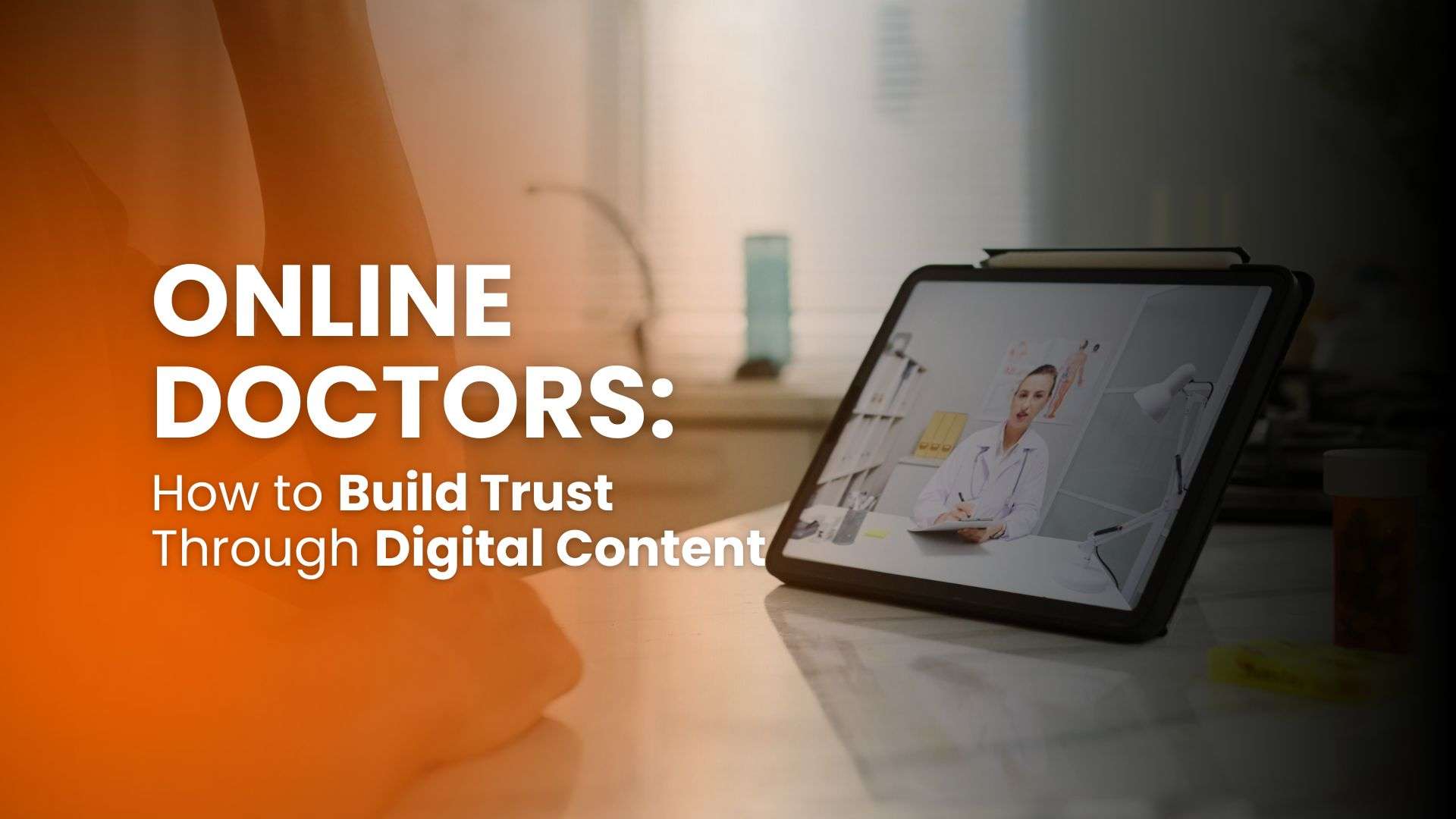
In today’s healthcare information landscape, online doctors are becoming increasingly influential. In a world where the first interaction between patient and professional often happens through a smartphone screen, digital communication now represents a strategic lever to build reputation and trust.
When people search for a doctor online, in fact, they don’t just check credentials. They go far beyond, reading posts, watching videos, and browsing websites. And often, that first impression – fast but decisive – is where trust begins. That’s why effective communication isn’t just a bonus anymore, but becomes a key part of building credibility. And this is exactly where a new form of doctor–patient relationship is taking shape.
The web as a new space for connection and guidance
In the realm of online doctors the digital world, besides a showcase, is a true space for relationship-building. It’s where people go looking for answers, clarity, and direction. And it’s where the journey toward trust either starts or stops.
Trust can be achieved through a clear, calm, and precise content. Speaking effectively doesn’t mean adapting to digital trends. Instead, it’s about respecting the intelligence of the audience, offering clarity. Simplifying without dumbing down. Being present, without being invasive.
Communicating competence – not just information
It’s not the information itself that sets professionals apart, but how they share it. The web is saturated with content, yet still lacking truly authoritative voices. That’s why doctors who choose to show up online must do so with care and intention.
When a doctor develops a consistent communication style – for example, by regularly addressing common questions, explaining healthcare updates, or exploring specific topics – they’re not informing and building reliability too. In this way, digital communication, supposed to be clear, precise and evidence-based, works as an extension of the clinical method.
Being credible online requires both clarity and mastery of your subject. A professional who can educate without oversimplifying – and speak with empathy without losing rigor – becomes a trusted point of reference. Not because of image, but because of what they genuinely offer.
Online doctors: risks to avoid
Being visible online also means being exposed to potential communication missteps. And in the medical field, an error can lead to serious consequences: legal, ethical, and reputational.
Regulations are clear. The Medical Code of Ethics prohibits misleading claims, promises of results, sensationalism, or aggressive promotional tactics. Likewise, using patient images or sharing clinical data goes under strict attention to privacy and informed consent.
Overly emotional storytelling or a tone that feels too personal can also appear unprofessional. Once again, balance is key: combining empathy with accuracy, closeness with credibility.
Strategic foundations for building trust
Building trust online isn’t just about being present. It’s about showing up with strategic clarity. Every online doctor should focus on five key principles:
- Clear positioning: What are your areas of specialization? What do your patients often ask? Define your niche to build recognizability and authority.
- Useful, patient-centered content: Short videos, simple articles, answers to common questions. Each piece should provide clarity, reduce uncertainty, and add real value.
- Professional and human tone: Speak clearly and respectfully. Show empathy, without turning your message into emotional marketing.
- Consistent and sustainable output: Better one well-produced post a month than sporadic, superficial content. Consistency builds familiarity – and familiarity builds trust.
- Integrated communication channels: Your website, Google profile, social platforms, and blog should all reflect the same identity—both visually and in tone. Each touchpoint should support the others.
When online presence isn’t the right choice
Not every doctor needs to be on social media. If time, consistency, or resources are limited, it may be better to focus on a more structured, institutional presence: a solid website, an updated Google Business profile, or quality static content.
Online doctors: a responsibility, not just an opportunity
Being a doctor online today doesn’t just mean adapting to digital formats. It means bringing your expertise into a fast-paced, simplified, and often unregulated space—with intention.
In an age when misinformation spreads quickly, ethical professionals must act as anchors of reliability, quality, and clarity. Good communication isn’t marketing. It’s part of care. And when done with method, ethics, and authenticity, digital communication becomes one of the most advanced forms of therapeutic relationship.