The biggest obstacle in content marketing isn’t creating content. The real challenge often comes later, when halfway through the month ideas begin to dry up and the editorial calendar turns into a daily scramble to figure out what to post.
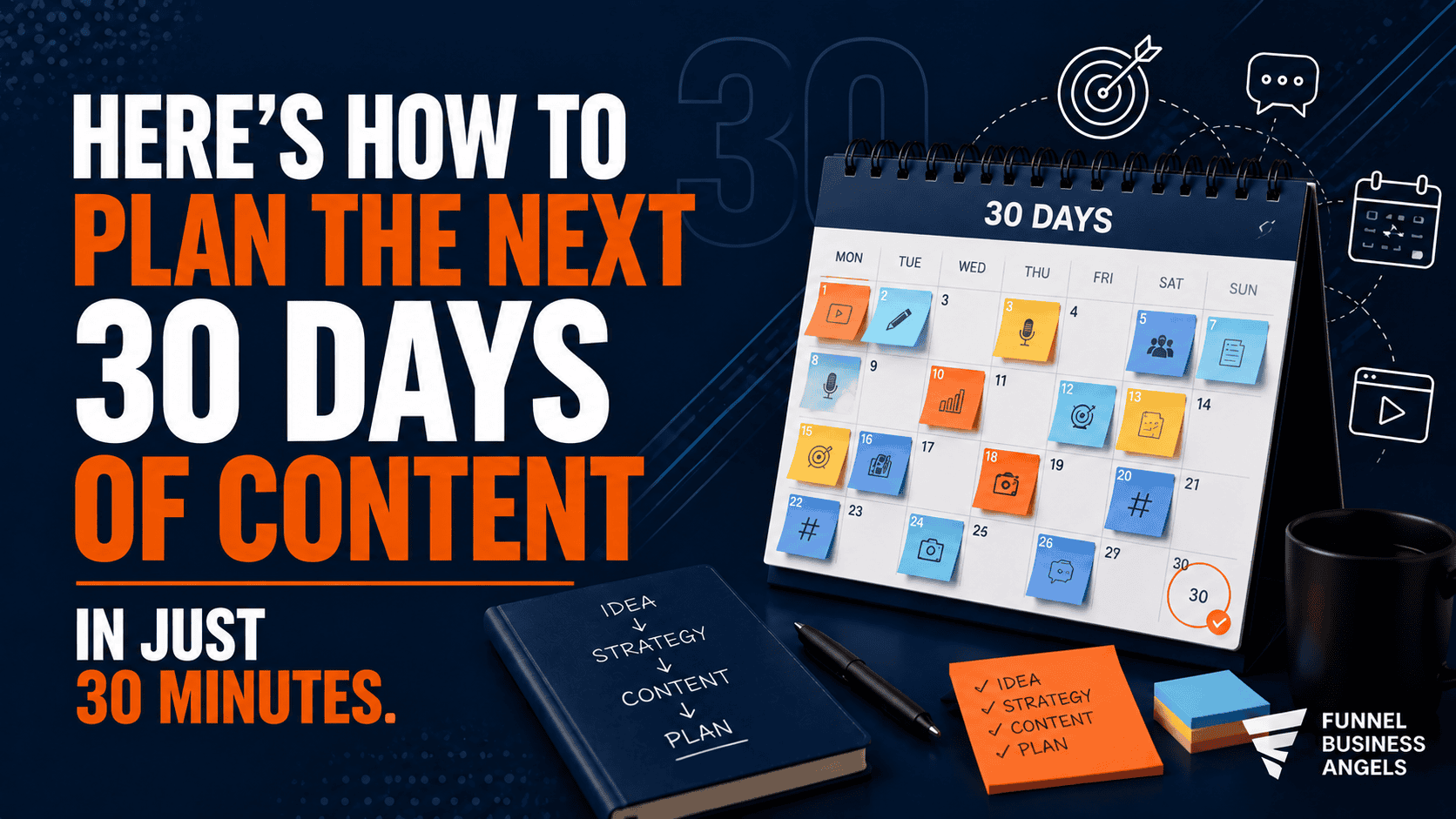
To avoid this creative block, you need a system that is simple, repeatable, and quick to implement. One effective approach is to combine six core topics with five content formats, creating 30 ready-to-use content ideas in very little time. It’s a framework that helps you publish consistently, maintain a clear positioning, and spend far less time deciding what to post.
Why So Many Content Strategies Fall Apart
Many editorial calendars start from the wrong place. They begin with an individual post instead of a structured system.
The result is predictable: every day you have to decide from scratch what topic to cover, what angle to take, and what format to use.
Without a system, content creation becomes fragmented. You only publish when inspiration strikes, without consistency or a long-term direction.
A well-planned strategy allows you to know in advance:
- What to say, meaning which topics to cover.
- How to say it, meaning which communication format to use.
- Why you’re saying it, meaning how it supports positioning and conversions.
The 6×5 Method: A Simple and Practical Framework
The core idea is remarkably straightforward.
Identify six key topics within your niche and combine them with five content formats that perform well in your market. The result is a matrix containing 30 content ideas ready to be developed.
This approach transforms random content creation into an organized process. The goal isn’t to produce generic posts but to create content aligned with what your audience is actually searching for and the perception you want to build over time.
Step One: Identify the Six Core Topics in Your Niche
The first step is defining the six main subjects around which your communication revolves.
A mind map can be particularly useful: place your niche at the center and branch out into the themes most relevant to your audience.
Avoid choosing topics that are too broad or abstract. Instead, select subjects that directly reflect your audience’s daily experiences.
The strongest topics usually revolve around:
- Problems your audience wants to solve.
- Goals they want to achieve.
- Common mistakes they frequently make.
- Doubts preventing them from taking action.
- Myths that need correcting.
- Real-life examples that make concepts tangible.
This process prevents vague content creation. Each topic becomes a strategic pillar anchored in real audience needs, making it more valuable for both engagement and conversions.
How to Choose Topics That Actually Matter
An effective topic is more than an industry category.
It should represent the intersection between your expertise, your positioning, and your audience’s interests.
For example, instead of broad labels like “marketing,” “sales,” or “social media,” create audience-centered themes such as:
- The most common content creation mistakes.
- Editorial planning challenges.
- Consistency and growth objectives.
- Content marketing myths.
- Running out of content ideas.
- Practical examples of successful content.
By doing this, your editorial calendar revolves around conversations your audience immediately recognizes as relevant rather than empty keywords.
Step Two: Select Five Formats That Actually Work
A format is simply the way an idea is presented. Two posts covering the same topic can produce completely different results depending on how they’re structured.
Among the most effective formats are:
- Storytelling.
- Common mistakes.
- Case studies.
- Tutorials.
- Opinion pieces.
These formats allow you to approach the same topic from multiple perspectives.
For example, a customer problem could become:
- A story illustrating a real situation.
- A list of mistakes to avoid.
- A case study with lessons learned.
- A practical how-to guide.
- A strong opinion that differentiates your brand.
Where to Find the Best Formats for Your Market
A smart strategy is to observe what already performs well among competitors or leading creators in your industry.
The goal isn’t to copy them but to identify narrative structures that capture attention and reinterpret them through your own expertise, tone of voice, and positioning.
This is where originality emerges.
Your content remains recognizable while becoming strategically aligned with your own brand.
Six Topics × Five Formats = Thirty Ready-to-Create Content Ideas
Once you’ve established your six topics and five formats, planning becomes dramatically easier.
Every topic can be combined with every format, creating a matrix of 30 different content opportunities.
This provides an entire month of structured ideas.
They’re not fully written posts yet, but they form a clear, organized editorial foundation that’s easy to develop.
The immediate advantages include:
- Eliminating writer’s block.
- Reducing time spent choosing topics.
- Maintaining publishing consistency.
- Strengthening brand positioning.
- Increasing the likelihood of creating relevant, conversion-focused content.
Why This System Also Improves Conversions
The purpose of this method isn’t simply publishing more content.
It’s about publishing better content.
When posts originate from topics tied to genuine audience problems, goals, mistakes, and questions, they become far more relevant.
When those topics are presented through effective formats, they also become easier to consume and remember.
This combination of relevance and clarity increases the likelihood that content will generate tangible results through attention, trust, and conversions.
From Planning to Production: How to Apply the Method
Once your 6×5 matrix is complete, dedicate a specific block of time to content production.
Rather than creating one post at a time reactively, it’s far more efficient to spend one, two, or three focused hours producing multiple pieces in advance.
This allows you to:
- Record several videos in one session.
- Maintain consistency across messages.
- Optimize your creative workflow.
- Have content ready well before publication.
With an editorial calendar built this way, publishing no longer requires inventing everything from scratch.
The strategic work has already been completed.
The Importance of Finding a Unique Angle
The system creates structure, but it doesn’t replace strategic thinking.
What truly makes content memorable is your ability to present each idea from a distinctive perspective.
Once you’ve selected the topic and format, ask yourself:
What makes my version different?
This is where your experience, positioning, and understanding of your audience become decisive.
Two professionals can start with exactly the same topic and format combination yet achieve completely different results based on how they interpret and present it.
A Stronger Editorial Plan with Less Improvisation
The 6×5 Method helps eliminate one of content creation’s biggest mistakes: relying entirely on inspiration.
When planning is built around a simple, repeatable structure, maintaining consistency becomes much easier without sacrificing quality.
In summary, the process looks like this:
- Identify the six core topics within your niche.
- Choose five formats that perform well in your market.
- Combine topics and formats to generate 30 content ideas.
- Batch produce the material.
- Publish consistently with a clear strategic direction.
With a framework like this, your editorial calendar stops being a daily problem and becomes an operational asset.
Content creation becomes faster, more organized, and far more aligned with your business objectives.