The Google Ads landing page is one of the most underrated elements in pay-per-click campaigns, but it’s also one of the most crucial for success. You can work perfectly on keywords, ads, and budget, but if the user lands on a confusing, generic, or distracting page, they click away. An effective landing page is not just a nice-looking page: it’s a page built to prompt a single action, removing all distractions. If you want to get more leads, sales, or sign-ups from your Google Ads campaigns, you need to start right here: with the quality of your destination.
Why the Landing Page Affects Performance
Every click you get from a Google campaign has a cost. If it doesn’t turn into action, it’s wasted budget. The Google Ads landing page has a direct impact on the ad quality score, which in turn influences how much you pay per click. Google rewards pages that are relevant, fast, and focused on the stated goal. A well-crafted page lowers the CPC, improves the conversion rate, and increases the overall ROI. Companies that invest in the quality of their landing pages often see their performance double without increasing their advertising budget.
Ideal Structure of a Google Ads Landing Page
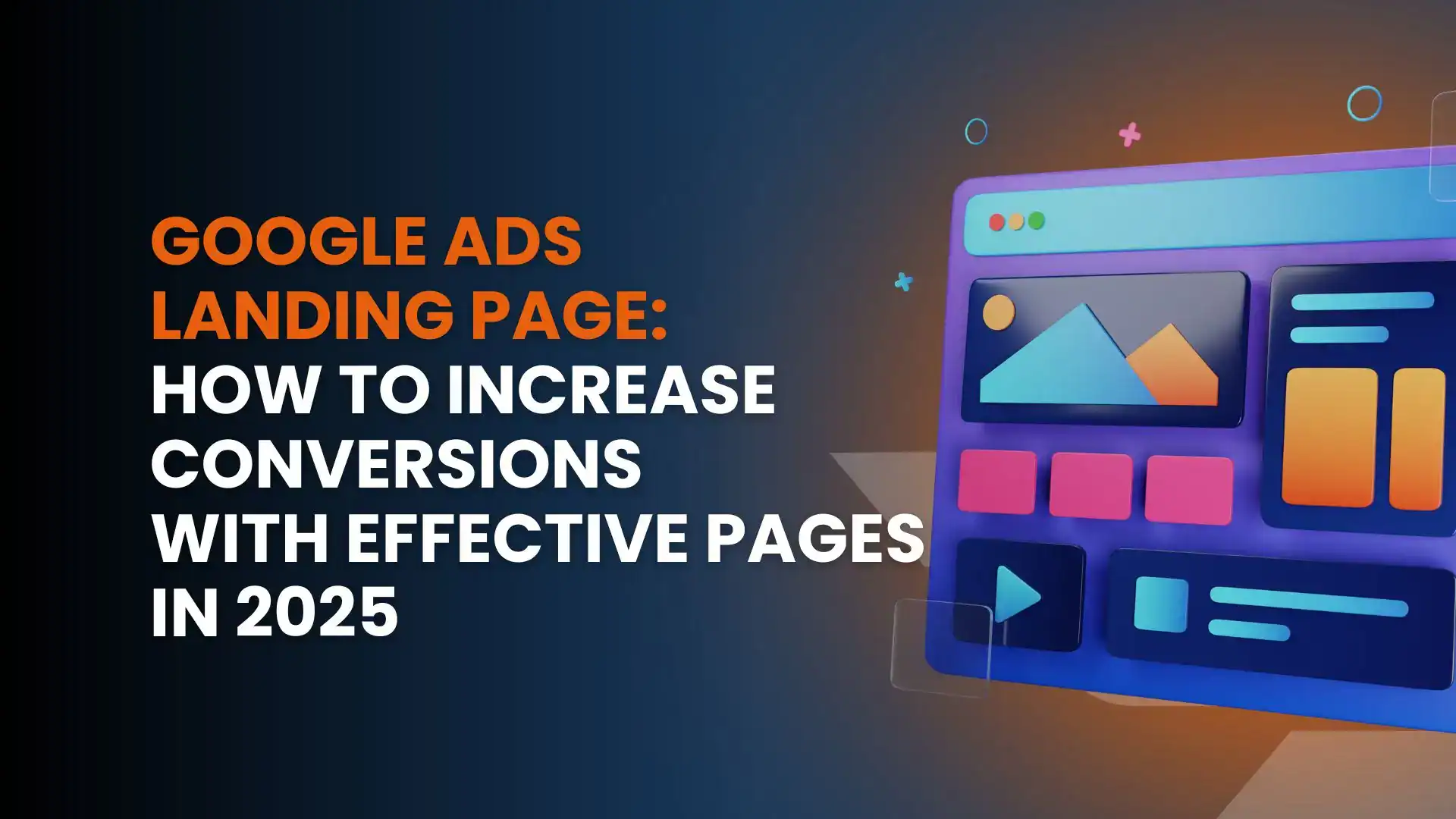
A good Google Ads landing page follows a simple logic: clear promise, tangible benefits, and a call to action. The recommended structure is:
-
Main Headline: reflects the search intent and provides an immediate answer
-
Supporting Subtitle: expands the promise with a tangible benefit
-
Descriptive Paragraph: explains the value of your offer in 3-4 sentences
-
Bullet Points: short lists of practical advantages, measurable results, or unique features
-
Testimonial or Social Proof: a quote from a customer, a review, or a concrete numerical fact
-
Clear Call to Action: “Request a quote,” “Download the guide,” “Book now”
-
Simple Form: a few fields, maximum 4 (name, email, phone, optional message)
Avoid external links, navigation menus, or elements that take the user off course. An effective landing page is a closed door that only opens toward conversion.
What Differentiates a Converting Page from a Distracting One
The difference between a landing page that converts and one that makes users leave lies in three key factors: clarity, speed, and relevance.
-
Clarity: The visitor must immediately understand where they are, what you offer, and what happens if they fill out the form.
-
Speed: the page must load in less than 2 seconds, especially on mobile. Use tools like PageSpeed Insights to check this.
-
Relevance: The landing message must be consistent with the ad. If the ad promises a free ebook, the page must feature that ebook prominently.
Anyone clicking from Google is in “immediate solution mode.” If the answer isn’t clear, they leave. And with them, part of your budget.
Trust Elements That Improve Conversion Rate
In addition to structure, there are elements that increase trust and therefore the likelihood of action. The most effective ones include:
-
Visible Logo and Branding: strengthens identity
-
Real Contact Information: phone number, email, office location
-
Certifications or Security Badges: especially for e-commerce or sensitive data collection
-
Real Testimonials with Name and Photo: increase credibility
-
Countdown or Time-Limited Offer: creates urgency if well managed
All of these elements must be true, measurable, and consistent with your target audience. The visitor must perceive reliability and professionalism before even reading the details.
Continuous Optimization: What to Test and How
A Google Ads landing page is never finished. It needs to be tested, optimized, and improved. The most common A/B tests include:
-
Different headline
-
CTA button color
-
Number of fields in the form
-
Order of content
-
Adding or removing visual elements
Each test should be single and measured on at least 1,000 visits to make statistical sense. Use tools like Google Optimize or Hotjar to collect behavioral data and understand where to improve.
Case Study: +52% Conversions with a Title Change
A digital training school reviewed the landing page connected to a Google Ads campaign. The original title was: “Learn to program with our courses.” The new title, tested for two weeks, became: “Become a developer in 3 months, even from scratch.” The conversion rate rose from 6.4% to 9.7%, with the same traffic. The content remained identical. Only the approach to addressing the search intent had changed. A more result-oriented title triggered a stronger response.