Instagram Archives and Stories: how is changing the way we publish and rediscover content
Instagram continues to evolve, and two upcoming features expected in spring 2026 could change the way users manage their content and interact with stories.
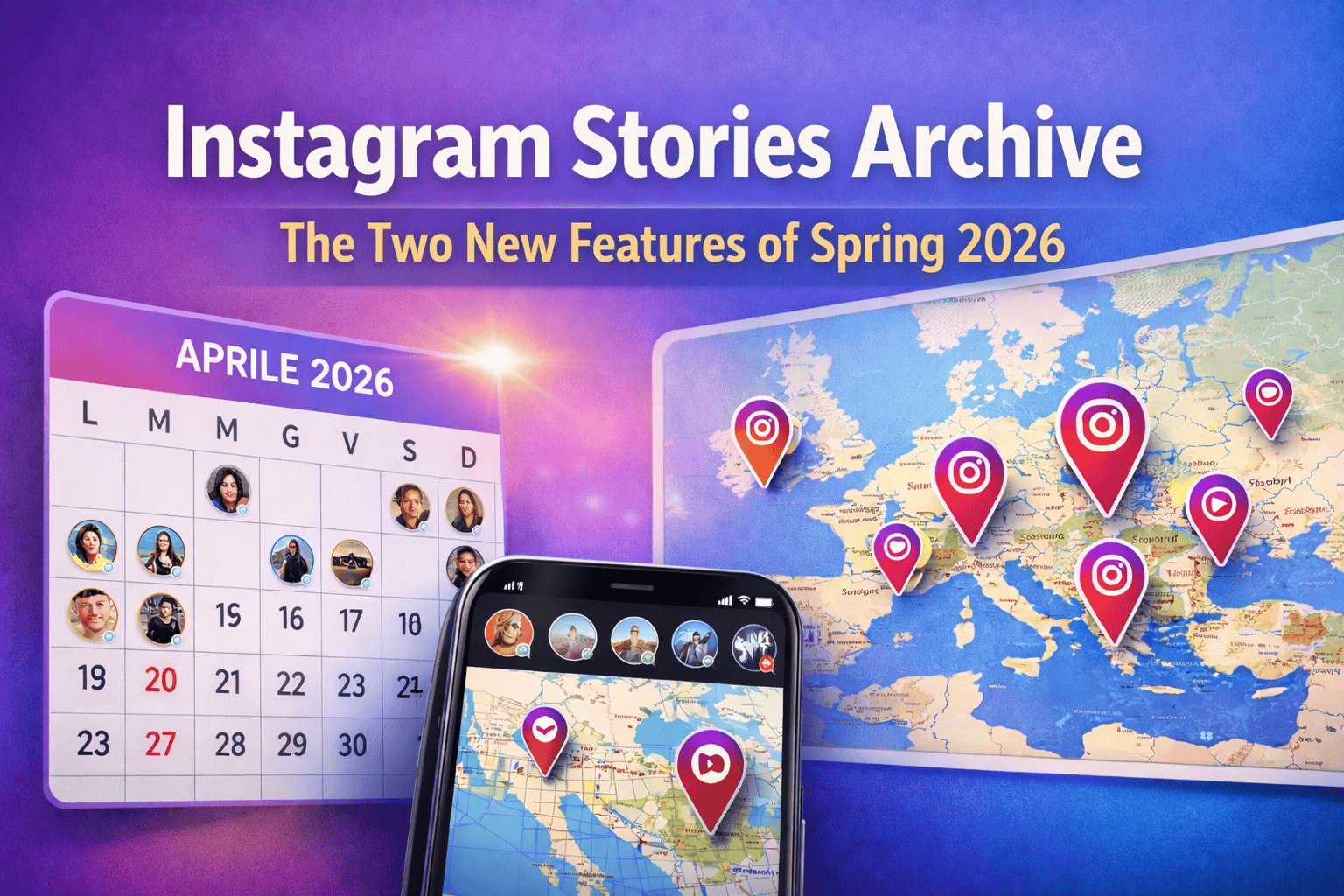
The platform is experimenting with a calendar-based archive view and a geographic map for stories, two tools designed to make content more discoverable and easier to navigate over time.
At first glance these features might seem minor. In reality, they reveal a deeper shift in how Instagram wants users to experience their content history.
Let’s take a closer look.
A Calendar View for Instagram Stories
One of the most interesting updates being tested is a calendar interface for archived stories.
Instead of scrolling endlessly through past content, users will be able to see a monthly calendar where each day shows the stories published on that date.
This means you will be able to:
-
browse your stories by date
-
quickly revisit moments from specific days
-
rediscover content that would normally disappear into the archive
For creators, brands, and social media managers, this could become a powerful tool for content analysis and editorial planning.
Imagine being able to quickly check:
-
what type of content you posted on certain days
-
how often you publish stories
-
whether your storytelling rhythm is consistent over time
It turns the archive into something much more strategic than just a storage folder.
A Map Showing Where Stories Were Published
The second feature being tested introduces a map view for Instagram stories.
This interface allows users to see their content distributed geographically, showing the locations where stories were recorded or tagged.
In practice, users will be able to explore their content history through a visual map, similar to how some photo apps organize pictures based on location.
For many users this will feel almost like a digital travel diary, allowing them to relive moments tied to specific places.
But the implications go beyond nostalgia.
For businesses and creators, location-based archives could help with:
-
tracking content created in different cities or events
-
identifying where brand storytelling happens most frequently
-
organizing travel or event coverage
It’s another way Instagram is turning content into structured memories rather than temporary posts.
Why Instagram Is Investing in Content Memory
For years, Instagram stories have been defined by their temporary nature.
They disappear after 24 hours, encouraging spontaneity and fast consumption.
However, Instagram has gradually been building tools that preserve these moments:
-
story highlights
-
personal archives
-
saved collections
The new calendar and map views take this idea even further.
They transform stories into something closer to a personal content timeline, where users can explore their digital memories through time and space.
In other words, Instagram is trying to balance two forces:
-
the speed of social media
-
the permanence of personal history
What This Means for Creators and Brands
If these features become widely available, they could subtly change how people think about stories.
Until now, stories have often been treated as disposable content.
But when posts become easily searchable through time and geography, they gain new value.
For creators, this could encourage:
-
more intentional storytelling
-
better organization of travel or event content
-
long-term narrative building through stories
For brands, it could help create location-based storytelling, especially for businesses connected to physical places such as:
-
restaurants
-
events
-
tourism
-
retail experiences
The archive stops being a simple backup and becomes part of the content strategy itself.
A Small Update with Bigger Implications
At first glance, a calendar and a map may look like simple interface improvements.
But in reality they reflect something deeper.
Instagram is slowly transforming from a real-time sharing platform into a structured memory platform, where past content becomes easier to revisit, analyze, and organize.
For users, it makes personal content more meaningful.
For marketers and creators, it opens new possibilities in how stories are used, planned, and remembered.
Spring 2026 might bring two small tools that quietly reshape the way we experience Instagram.