For the past several years, discussions around social media growth have often revolved around one seemingly simple question: how many followers do you need to achieve results?
For a long time, the answer appeared obvious. More followers meant more visibility, more authority, and, at least in theory, more business opportunities. It was a mindset that shaped the evolution of social media from the very beginning and encouraged professionals, businesses, and creators to view follower count as one of the most important metrics to track.
Today, however, the landscape has changed dramatically.
Not because followers and likes have suddenly become useless, but because their role within the digital ecosystem has been reshaped by a much broader transformation in how platforms distribute attention.
A quick look at Instagram, Facebook, or TikTok feeds makes this clear. More than ever, people are discovering content from accounts they do not follow, brands they have never heard of, and creators who were completely unknown just days before.
At the same time, the opposite phenomenon is happening as well: accounts with large communities often struggle to reach even a small percentage of their own audience.
This apparent contradiction forces us to ask a different question.
Not whether followers and likes still exist, but how much they actually influence visibility compared to a few years ago.
How Instagram and Facebook Changed Content Distribution
To understand what is happening, it helps to look back at how these platforms evolved.
For many years, Facebook and Instagram operated according to a relatively simple principle. Users built networks of connections, and the platform distributed content primarily within those networks.
If someone followed a page or profile, that action was considered a strong enough signal to regularly show content from that account.
Over time, however, this model began to reveal clear limitations.
The exponential growth in content made it impossible to show everything to everyone, while increasing competition for attention pushed platforms to develop increasingly sophisticated recommendation systems.
Today, Instagram and Facebook no longer focus solely on who you follow.
They analyze what you watch, how long you spend on content, which videos you finish, which posts you save, which Reels you share, and even which topics hold your attention the longest.
In other words, platforms are gradually shifting from declared connections to observed behavior.
This is why many professionals still operate using social media rules from the past while algorithms are already functioning according to entirely different principles.
Why Followers Matter Less Than Before but Are Not Useless
Discussions around this topic often fall into two opposite mistakes.
The first is treating followers as the most important metric of all.
The second is claiming that followers no longer matter at all.
The reality is far more nuanced.
Followers still carry meaningful value, but today that value is tied primarily to perception, credibility, and authority building.
When a potential client visits the profile of a creator, consultant, or company, follower count inevitably contributes to their first impression.
It is not the only factor that matters, but it remains a form of social proof that influences how people perceive a brand’s digital presence.
What has changed is the ability of followers to guarantee distribution.
Having a large community no longer automatically translates into visibility.
Platforms do not distribute content because it comes from an account with many followers. They distribute content because they believe it has a high probability of generating interest.
This distinction is significant because it shifts the focus away from audience size and toward audience response.
Do Likes Still Matter or Have They Become a Vanity Metric?
The answer once again requires more nuance than most online discussions provide.
Saying likes no longer matter would be inaccurate.
At the same time, they do not carry the same weight they did five or six years ago.
The reason is straightforward.
A like is one of the easiest and quickest interactions a user can make. It takes only a second and often happens almost automatically while scrolling.
Because of this, platforms have gradually started assigning greater importance to other behavioral signals that reveal deeper levels of interest.
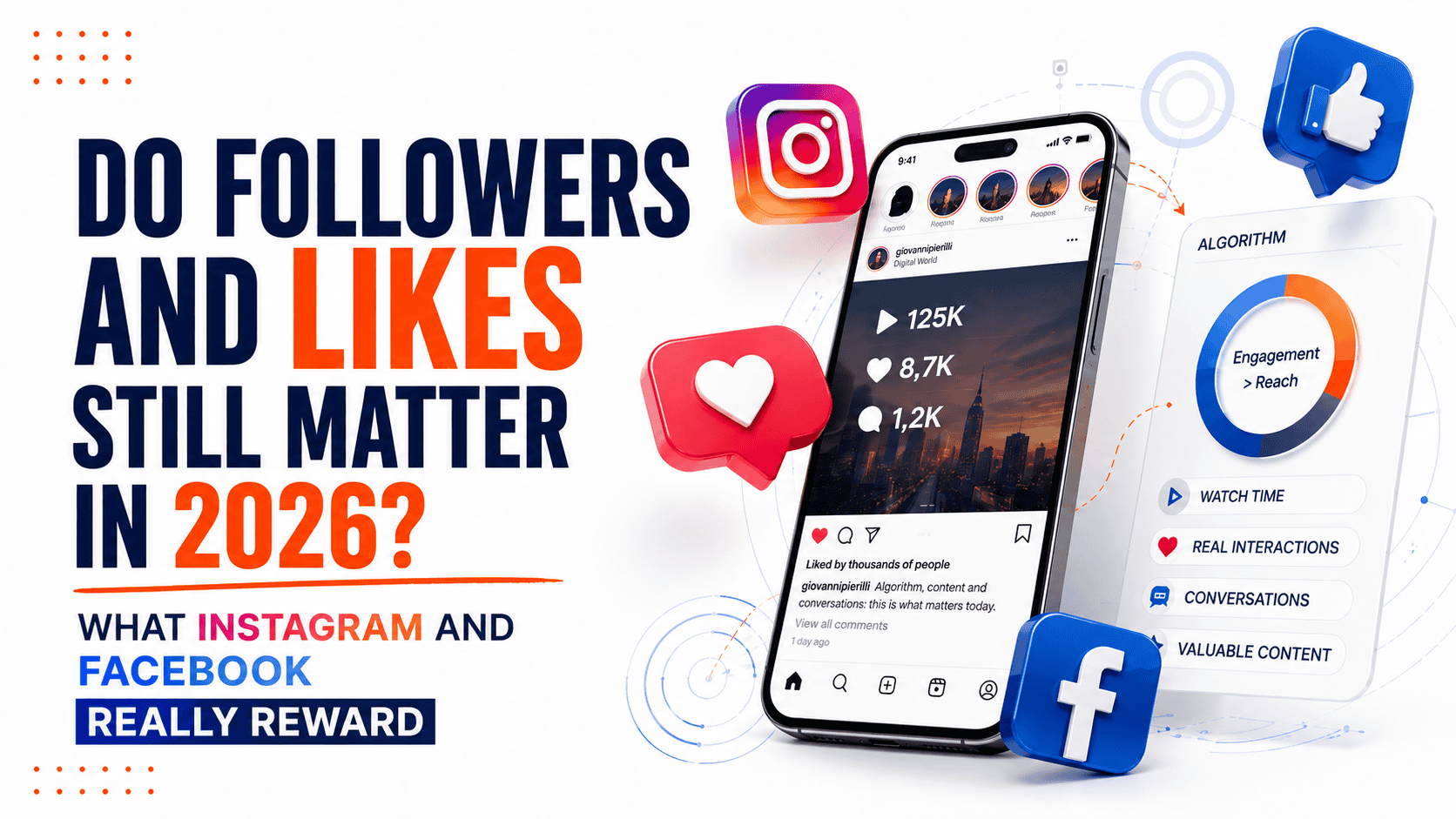
When someone watches a Reel until the end, saves it for later, or shares it with another person, they provide the algorithm with much richer information than a simple like.
At that point, the platform understands that the content did more than attract attention. It generated enough interest to inspire an additional action.
This is why some content receives relatively few likes yet still achieves massive distribution.
The algorithm is evaluating something much deeper than surface-level approval.
The Metric Instagram and Facebook Are Really Rewarding
If there is one concept that best summarizes the evolution of social media algorithms over the past several years, it is not followers or likes.
It is attention.
Attention has become the most valuable resource in the digital ecosystem, and platforms are building their distribution systems around the ability to capture and retain it.
The signals that matter most today — watch time, video completion rates, saves, shares, and meaningful interactions — all have one thing in common:
They measure how effectively a piece of content holds someone’s attention.
This also explains why creative quality has returned to center stage.
In an environment where distribution depends less on follower count and more on attention retention, success belongs not to the largest audience, but to those who create content that keeps people engaged.
What Businesses and Professionals Should Measure Today
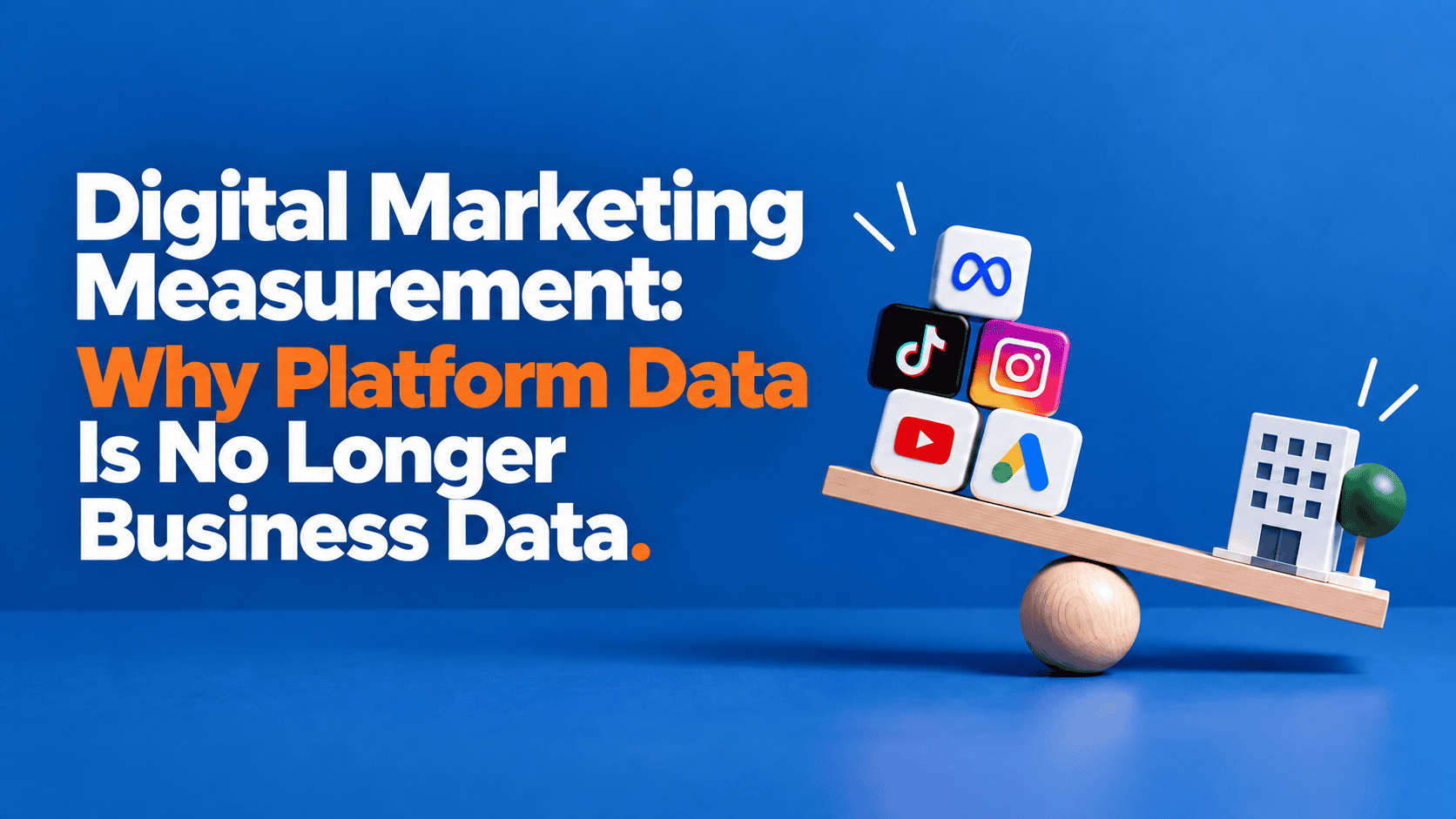
Many businesses still produce reports where follower counts and likes occupy most of the available space.
Tracking these metrics is not necessarily wrong, but it becomes problematic when they are used as the primary indicators of success.
Today, it is far more useful to monitor:
- Quality of interactions
- Watch time
- Profile visits
- Inbound inquiries
- Qualified traffic
- Business opportunities generated
These metrics provide a much clearer picture of whether a digital presence is contributing to business growth or simply accumulating numbers without meaningful impact.
Conclusion
We started with a simple question:
Do followers and likes still matter in 2026?
The answer is yes, but not in the same way they once did.
They still serve as useful signals. They still contribute to authority and credibility. They still remain part of the language of social media.
At the same time, they are no longer the center of the system.
Today’s algorithms focus much more heavily on what happens after the view, after the click, and after the initial interaction.
For businesses, professionals, and creators, the takeaway is clear.
Chasing followers and likes alone means measuring social media according to yesterday’s rules.
Creating content that generates genuine attention, engagement, and interest means operating according to the principles that are shaping social platforms today and will likely continue shaping them in the future.