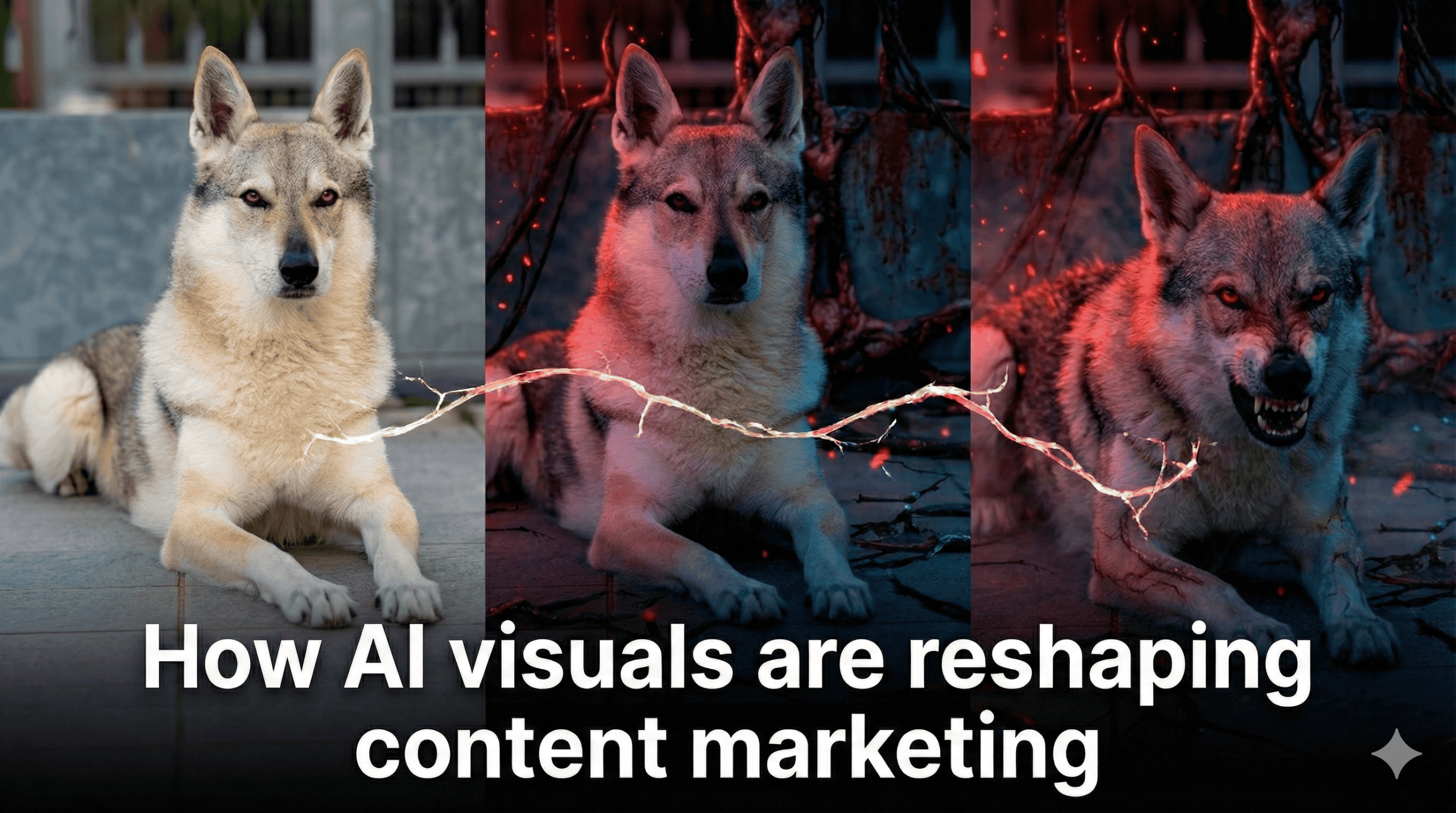
The visual aesthetic inspired by Stranger Things and amplified by tools like Nano Banana is rapidly transforming how brands approach content creation. These images use dramatic lighting, eighties tones, and cinematic composition to capture attention instantly. Stranger Things and Nano Banana are not superficial trends, because their impact shows how AI visuals are redefining production speed and creative strategy inside marketing workflows. The aesthetic is familiar, recognisable, and easy to decode, which makes it ideal for funnels that need quick engagement and strong narrative clarity.
Companies adopting these visual styles discover that AI allows faster production of consistent and scalable assets. The shift is not about nostalgia but about the ability to recreate a collective visual language with high technical precision. Stranger Things and Nano Banana demonstrate how generative AI can support marketing teams by reducing production barriers and enabling rapid creative variation during campaign testing. The result is a more dynamic content strategy capable of adapting to market needs with greater speed.
Cinematic aesthetics as a strategic asset
The cinematic tone linked to Stranger Things works because it captures attention more effectively than standard stock photos. The contrast between red and blue light, the dramatic framing, and the narrative tension create a stronger emotional response. This visual power is valuable in B2B, where abstract concepts often struggle to attract interest. Stranger Things and Nano Banana help convert technical ideas into accessible images, improving clarity and supporting the copy with a stronger narrative layer.
This approach strengthens the message throughout the funnel. When an image grabs attention in the first seconds, the user is more willing to read, explore, and continue through the journey. This dynamic is essential for campaigns focused on high-value services, because a strong visual anchor increases message retention and improves conversion potential.
Why Stranger Things and Nano Banana work in B2B workflows
Stranger Things and Nano Banana perform well in B2B because they simplify the communication of complex ideas. The visual language is familiar and reduces cognitive effort, which makes it easier to explain processes, challenges, or solutions. This clarity is crucial inside sectors such as legal consulting, finance, software, and technology, where the message often requires more context.
Companies testing these aesthetics see a measurable increase in productivity. What once required days of creative development can now be produced in minutes. This speed enables a new approach to A/B testing because teams can generate, refine, and adapt visual assets without slowing down campaign operations. Stranger Things and Nano Banana become strategic tools rather than temporary trends.
The technical shift behind AI-generated visuals
Producing images in the style of Stranger Things and Nano Banana does not rely on filters. AI rebuilds each visual element, from lighting to texture to depth. This reconstruction allows teams to transform simple or low-quality photos into high-impact cinematic visuals suitable for professional campaigns. The technical accuracy of AI generation reduces dependency on large production budgets and accelerates the entire creative workflow.
This capability unlocks wider creative exploration. Teams can generate visuals that align with specific metaphors, messages, or segments inside the funnel, creating communication that feels tailor-made. AI moves ideas from concept to execution quickly, allowing more time for strategic refinement.
How these visuals support funnel performance
Inside digital funnels, Stranger Things and Nano Banana improve ad performance by creating visual hooks that increase curiosity and encourage deeper reading. The aesthetic strengthens the narrative and helps the user understand the emotional tone of the campaign. Lawyers, doctors, consultants, and entrepreneurs use these visuals to explain complex points more clearly and differentiate themselves from competitors.
This modular approach supports every stage of the funnel. During awareness, the visuals capture attention;uring interest, they support the message. During conversion, they reinforce the value proposition. AI makes it possible to adjust each visual based on test results or changes in strategy, supporting a more agile marketing workflow.
Strategy remains the decisive factor
Trends linked to Stranger Things and Nano Banana will evolve, but the strategic value of AI-generated visuals remains stable. The long-term shift is the speed and consistency AI brings to creative production, not the trend itself. The funnel continues to define the outcome, because even the best visual requires a solid strategic framework to convert attention into measurable results.
AI accelerates production, but strategy determines alignment, clarity, and relevance. For brands seeking deeper guidance on visual best practices, official Meta Business resources offer detailed insights. For broader funnel strategies, additional articles on the blog explore how these visual tools integrate with performance-driven marketing.