It’s almost ironic.
In an age when brands spend millions crafting complex digital funnels and AI-powered storytelling, American Eagle managed to dominate global attention with just two words: Great Jeans.
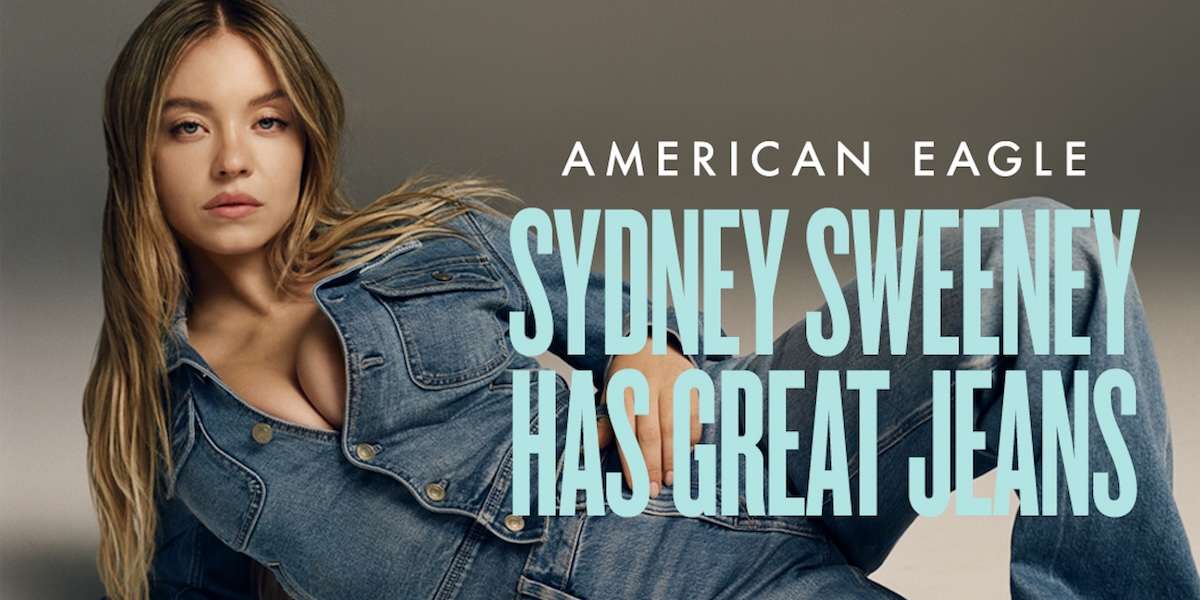
The campaign, starring Sydney Sweeney, quickly became what the press and social media now call the viral fashion campaign of the year.
It’s rare that something so light and playful — a pun mixing jeans and genes — sparks this much conversation, but perhaps that’s exactly why it worked. The simplicity disarmed people. It was catchy, clever, and slightly mischievous. In the first 48 hours, the ad had been shared thousands of times, dissected on X threads, parodied on TikTok, and turned into memes by the same generation it was meant to target.
By the end of the first week, the brand had achieved what most marketers dream of and rarely obtain: being talked about everywhere, from fashion blogs to business newspapers. And all of that with an ad that didn’t even look like one.
A classic brand rediscovering its cultural pulse
For decades, American Eagle was the go-to brand for easy, everyday denim — comfortable, reliable, safe. But safety doesn’t sell to Gen Z.
After a few years of losing visibility to faster, meme-driven competitors, the brand needed more than a refresh: it needed a reason to matter again.
That’s where Sydney Sweeney comes in. Her image, suspended between glamour and relatability, made her the perfect symbol of modern youth. She embodies effortlessness — a concept this generation finds far more appealing than perfection.
Through her, American Eagle wasn’t just selling jeans; it was re-entering the cultural conversation.
And that’s what makes this viral fashion campaign so fascinating: it didn’t rely on new technology or AI-generated precision. It relied on something timeless — human connection, humor, and a sense of shared irony.
As Reuters reported, the numbers were extraordinary: 40 billion impressions, 700,000 new customers, and a social sentiment that remained predominantly positive, despite the controversy. That’s not luck — it’s cultural intuition.
Provocation as a calculated risk
It’s easy to think the controversy came as a surprise. It didn’t.
Inside American Eagle’s marketing department, the creative team knew exactly what they were doing. The wordplay between jeans and genes wasn’t random; it was a subtle commentary on how identity and fashion have become intertwined — a reflection of the times we live in.
The backlash, inevitable as it was, became part of the plan.
Instead of ignoring criticism, the brand embraced it, replying with humor and a light touch that only amplified engagement. When users joked about the slogan, the official account responded with winks and self-irony.
And that’s the genius of it: in an environment where brands fear mistakes, American Eagle proved that even a polarizing idea can build credibility when handled with authenticity.
Even the New York Post — usually quick to mock fashion excess — called it “a masterclass in turning controversy into relevance.” The stock price surged 9% in a single day.
The campaign didn’t just sell denim; it sold boldness.
Metrics that tell more than numbers
Of course, virality isn’t always a synonym for success.
But this time, numbers tell only part of the story. What matters more is the quality of attention. American Eagle didn’t just chase clicks — it built emotional engagement.
While traditional metrics like conversions or ROAS tell one truth, another lives beneath them: brand equity.
The viral fashion campaign revitalized how people perceived American Eagle — not as an outdated mall brand, but as a label capable of laughing at itself while staying relevant.
That’s the currency of modern marketing: being part of the dialogue.
Social media today is not a marketplace — it’s a living organism, made of humor, criticism, and collective storytelling. Whoever joins that conversation sincerely wins. And Great Jeans is proof that sincerity can be funny, even when it divides.
Lessons that reach far beyond fashion
There’s something deeply human about this campaign, and that’s what makes it instructive.
If you strip away the glamour, what remains is a marketing playbook grounded in empathy and courage.
First, it teaches that simplicity beats complexity. In a world of data, people crave lightness.
Second, it reminds us that provocation isn’t danger when guided by authenticity.
And third, it reveals the real role of the audience today: they’re not spectators but co-authors.
Many brands fear losing control of their message, but that control was always an illusion. The goal is no longer to dictate a story, but to ignite one — to give people something they want to remix, discuss, and reinterpret.
That’s what a viral fashion campaign really is: a story that leaves the brand’s hands and starts living on its own.
A conclusion for marketers, not just fans
The collaboration between American Eagle and Sydney Sweeney marked a turning point in fashion advertising — and not because of its budget or celebrity power, but because of its tone.
It was light, human, ironic, and brave. It said: “We know you’ll talk about us — and that’s fine.”
In an era of overly polished campaigns, that kind of honesty feels almost revolutionary.
Great Jeans wasn’t built to be perfect; it was built to be remembered.
And that’s why it worked.
Maybe the most brilliant part of this viral fashion campaign is that it didn’t just sell jeans — it sold the freedom to laugh at marketing itself.
That’s the kind of intelligence AI can analyze, but never fully replicate.